The Rise of China's Squid Fishing Fleet: Navigating Global Waters and Sustainability Challenges
China's distant-water squid fishing operations have expanded dramatically over the past decade, transforming global cephalopod fisheries while raising complex questions about marine resource management and international cooperation.
In the moonlit waters of the Southwest Atlantic, a Chinese jigger vessel deploys its automated lines, their luminescent lures dancing beneath the waves to attract Illex argentinus, the Argentine shortfin squid. This scene repeats across three oceans, from the Humboldt Current to the waters off West Africa, as China's squid fishing fleet has grown to become the world's largest operator in pelagic cephalopod fisheries.

Modern Chinese squid jiggers utilize automated systems and LED lighting to maximize catch efficiency while minimizing crew requirements. (Illustrative image)
Historical Development and Technological Evolution
China's entry into distant-water squid fishing began modestly in the 1980s, with initial forays into the Northwest Pacific targeting Japanese flying squid (Todarodes pacificus). According to data from the Food and Agriculture Organization of the United Nations, China's distant-water fishing fleet has grown approximately 40% since 2010, with squid vessels representing a significant portion of this expansion.
The technological transformation has been equally remarkable. Early vessels relied on manual jigging operations, where crew members would physically handle fishing lines. Today's modern squid jiggers feature:
- Automated jigging machines capable of operating hundreds of lines simultaneously
- LED lighting systems optimized for squid attraction at various depths
- Advanced sonar and fish-finding technology
- Onboard freezing and processing facilities
- Satellite communication and navigation systems
This technological edge, combined with substantial government support through fuel subsidies and favorable loan policies documented by OECD fisheries reports, has enabled Chinese vessels to operate efficiently in distant fishing grounds that were previously economically marginal for other nations.

Onboard processing facilities allow Chinese vessels to preserve catch quality during extended fishing expeditions. (Illustrative image)
Global Operations and Key Fishing Grounds
Chinese squid vessels now operate in virtually all major squid fishing regions globally. The fleet's mobility and scale have reshaped cephalopod fisheries economics and management challenges worldwide.
Southwest Atlantic Operations
The waters off Argentina have become a primary focus, with Chinese vessels targeting both the Argentine shortfin squid and the Patagonian squid (Loligo gahi). Research published in Science Magazine indicates that Chinese vessels now account for approximately 60-70% of the total catch in this region during peak seasons.
This concentration has led to diplomatic tensions, particularly regarding operations near Argentina's Exclusive Economic Zone (EEZ). The Argentine Naval Prefecture has reported numerous incidents of vessels fishing in contested waters or turning off automatic identification systems (AIS), complicating monitoring efforts.
Southeast Pacific Presence
In the Humboldt Current system off Peru and Chile, Chinese vessels target the jumbo flying squid (Dosidicus gigas). This species represents one of the largest invertebrate fisheries globally, with annual catches fluctuating between 800,000 and 1.2 million metric tons according to the FAO's Cephalopod Resources Database.
Chinese operations here have evolved from seasonal presence to year-round activity, with vessels following squid migrations across international waters. The fleet's efficiency has raised concerns among regional fisheries managers about potential overexploitation of this highly variable resource.
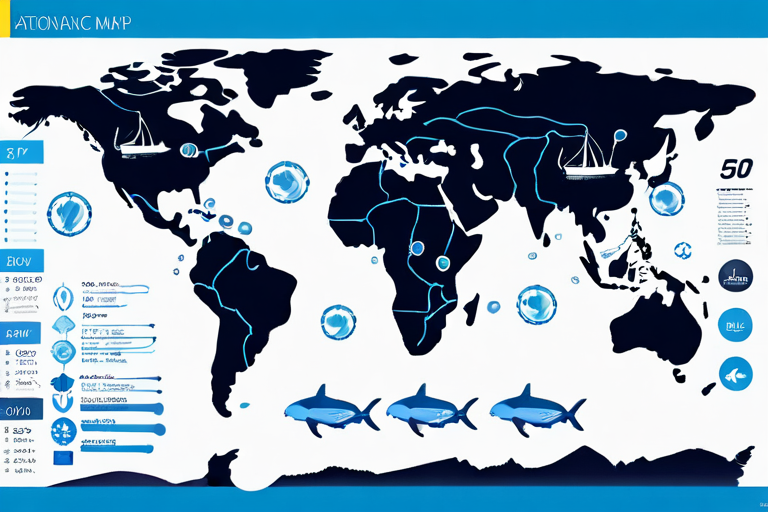
Chinese vessels follow complex squid migration patterns across international waters. (Illustrative image)
Northwest Pacific Traditional Grounds
Despite expanding globally, Chinese vessels maintain significant operations in traditional Northwest Pacific grounds, particularly targeting the Japanese flying squid. Data from the North Pacific Fisheries Commission shows Chinese catches in this region have remained relatively stable even as the fleet has expanded elsewhere, suggesting a strategic diversification rather than displacement of traditional operations.
Sustainability Challenges and Management Responses
The rapid expansion of China's squid fishing operations has raised significant sustainability concerns within the international marine conservation community. Squid populations are notoriously difficult to assess and manage due to their short lifespans, rapid growth rates, and high sensitivity to environmental conditions.
A 2022 study in the journal Fish and Fisheries highlighted several key challenges:
- Data Deficiencies: Many squid fisheries lack robust stock assessments, making sustainable catch limits difficult to establish
- Transparency Issues: Incomplete reporting of catches and fishing effort in some regions
- Ecosystem Impacts: Potential effects on predator species dependent on squid as prey
- Bycatch Concerns: Incidental catch of non-target species, including vulnerable marine life
In response to these challenges, China has taken steps toward improved management. The Ministry of Agriculture and Rural Affairs has implemented:
- Voluntary seasonal closures in certain fishing grounds
- Enhanced monitoring through vessel monitoring systems (VMS)
- Participation in regional fisheries management organizations (RFMOs)
- Research partnerships with international scientific bodies
However, critics argue these measures remain insufficient. Environmental organizations like Greenpeace International have documented continued issues with transshipment at sea, potential illegal fishing activities, and inadequate observer coverage on distant-water vessels.

Enhanced monitoring technologies are increasingly important for managing distant-water fisheries. (Illustrative image)
Economic Impact and Market Dynamics
China's dominance in squid fishing has significant implications for global seafood markets. Processed squid products—including frozen tubes, rings, and value-added items—form a substantial export commodity, with major markets in Europe, Japan, South Korea, and increasingly, domestic Chinese consumption.
The economic model relies on several factors:
This economic structure has enabled Chinese companies to weather market fluctuations that might challenge smaller operators. However, it has also drawn criticism for potentially distorting global markets and creating barriers to entry for developing coastal states seeking to develop their own squid fisheries.
Future Prospects and International Cooperation
As global demand for seafood continues to grow and wild fish stocks face increasing pressure, squid represents both an opportunity and a challenge for sustainable fisheries management. China's role as the dominant player in this sector positions it uniquely to influence future developments.
Key areas for future focus include:
- Improved Science-Based Management: Enhanced cooperation with international research institutions to develop robust stock assessment methodologies
- Transparency Initiatives: Greater data sharing through platforms like Global Fishing Watch
- Technology Innovation: Development of more selective fishing gear and improved monitoring systems
- Market Mechanisms: Certification schemes and traceability systems to reward sustainable practices
The United Nations Sustainable Development Goal 14 (Life Below Water) provides a framework for balancing conservation and utilization of marine resources. China's approach to squid fisheries in the coming decade will serve as a critical test case for whether large-scale distant-water fishing can align with global sustainability objectives.
Conclusion: Navigating Complex Waters
China's squid fishing fleet represents a remarkable achievement in maritime expansion and technological adaptation. From modest beginnings in regional waters, Chinese vessels now operate across global oceans, supplying markets worldwide with cephalopod products. However, this success brings substantial responsibilities.
The future of squid fisheries—and indeed, many global marine resources—will depend on finding a balance between economic opportunity and ecological sustainability. China's choices in managing its distant-water squid fleet will influence not only cephalopod populations but also international norms for high-seas fisheries management in an era of increasing ocean use and climate change impacts.
As the fleet continues to evolve, increased transparency, scientific cooperation, and genuine commitment to sustainable practices will be essential for ensuring that squid fisheries contribute to food security and economic development without compromising the health of marine ecosystems.
Sources and Further Reading:
- Food and Agriculture Organization of the United Nations (FAO) Fisheries Statistics
- OECD Review of Fisheries 2022
- Science Magazine: "Global expansion of China's distant-water fishing fleet" (2021)
- Fish and Fisheries: "Sustainability challenges for cephalopod fisheries" (2022)
- North Pacific Fisheries Commission Annual Reports
- United Nations Sustainable Development Goals Framework
Note: All images are illustrative representations. Specific vessel identification and location details have been generalized for educational purposes.