The Evolution of Sport Fishing Through Centuries
From ancient Egyptian reed rods to modern carbon fiber marvels, sport fishing has transformed from survival necessity to global passion

Ancient Origins: The Birth of Angling
The story of sport fishing begins not with recreation, but with necessity. Archaeological evidence from ancient Egypt dating back to 2000 BCE shows sophisticated fishing techniques using hooks made from bone and copper. The earliest known depiction of fishing with rod and line appears in Egyptian tomb paintings from the 5th Dynasty (around 2400 BCE), showing anglers using papyrus reed rods with linen lines.
According to The Metropolitan Museum of Art, ancient Egyptian fishermen developed remarkable expertise, creating weighted lines and barbed hooks that would be recognizable to modern anglers. The Greek historian Oppian, in his Halieutica written around 180 CE, provides the first systematic treatise on fishing methods, describing various techniques for different fish species.
Roman civilization took fishing to new heights of sophistication. The Roman author Aelian, in his On the Nature of Animals (circa 200 CE), describes Macedonian anglers using artificial flies made with red wool and feathers—arguably the first documented fly fishing. This technique would remain largely unchanged for nearly two millennia.
Medieval Refinement: Fishing as Art and Science
The Middle Ages saw fishing transition from pure subsistence to a pastime enjoyed by nobility. The Treatyse of Fysshynge wyth an Angle, attributed to Dame Juliana Berners and published in 1496 as part of The Boke of Saint Albans, represents the first English-language work dedicated entirely to recreational fishing. This remarkable text details twelve different fishing methods and describes the construction of rods from various woods including hazel, willow, and ash.
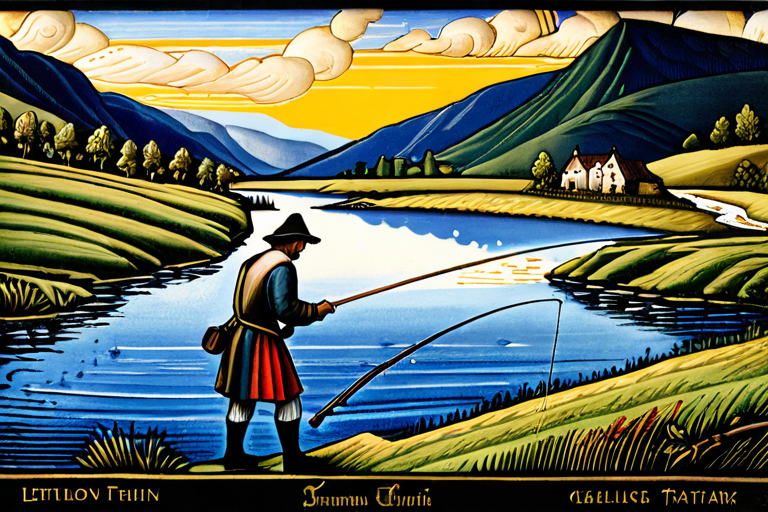
Berners' work demonstrates sophisticated understanding of fish behavior, recommending different baits and techniques for various species and seasons. She describes the making of lines from horsehair, noting that "the best and strongest is of white hair of the tail of a stallion." The treatise also includes detailed instructions for creating artificial flies for trout and grayling, with patterns that modern fly tiers would recognize.
During this period, fishing became increasingly associated with contemplative recreation. Monasteries often maintained fish ponds, and fishing rights became valuable property rights. The development of more reliable reels in China during the Song Dynasty (960-1279 CE) would eventually influence European fishing technology, though these innovations took centuries to spread westward.
The Renaissance of Angling: Izaak Walton's Legacy
The 17th century marked a turning point in sport fishing history with the publication of Izaak Walton's The Compleat Angler in 1653. This literary masterpiece, which has never been out of print, transformed fishing from mere technique to philosophical pursuit. Walton, a London ironmonger, framed angling as the perfect combination of sport, science, and spiritual contemplation.
As noted by The Shakespeare Birthplace Trust, Walton's work emerged during a period when recreational activities were becoming increasingly important to English society. The Compleat Angler contains not only practical fishing advice but also poems, songs, and philosophical dialogues that celebrate the pastoral ideal.
Walton's contemporary, Charles Cotton, contributed significantly to the fly fishing sections in later editions. Their collaboration produced the first systematic classification of artificial flies by the insects they imitated—a methodology that remains fundamental to modern fly fishing. The book's enduring popularity helped establish angling as a respectable pastime across social classes.

Industrial Revolution: Technological Transformation
The 19th century brought revolutionary changes to sport fishing equipment and accessibility. The Industrial Revolution enabled mass production of fishing tackle, making the sport available to the emerging middle class. According to research from the Smithsonian Institution, this period saw several key innovations:
- 1820s: The first modern fishing reels with multiplying gears appeared in Kentucky, USA
- 1840s: Commercial production of artificial flies began in England
- 1850s: The first split-bamboo rods were developed, offering unprecedented strength and flexibility
- 1870s: The first level-wind reels were patented, making casting more accessible to beginners
This era also saw the rise of fishing clubs and associations. The Schuylkill Fishing Company, established in 1732 in Pennsylvania, claims to be the oldest continuously operating English-speaking club in the world. In Britain, the Piscatorial Society was founded in 1836, focusing on the scientific study of fishing and conservation.
Fishing literature flourished during this period, with authors like Frederick Halford developing the "dry fly" doctrine for trout fishing on English chalk streams. His 1886 work Floating Flies and How to Dress Them established standards and techniques that influenced generations of fly fishers.
20th Century: The Age of Innovation and Conservation
The 20th century witnessed unprecedented technological advancement in sport fishing. The development of synthetic materials transformed every aspect of the sport:
Rod Technology
From split bamboo to fiberglass (1940s) to graphite (1970s), each material brought lighter weight and greater sensitivity. Modern carbon fiber rods offer precision unimaginable to earlier generations.
Line Evolution
Silk lines gave way to nylon monofilament (1938), followed by braided Dacron and modern fluorocarbon. Each innovation improved casting distance, sensitivity, and invisibility to fish.
Perhaps the most significant development was the growing conservation movement. As noted by the National Geographic Society, overfishing and habitat destruction led to the establishment of fishing regulations, catch limits, and the concept of "catch and release" popularized by Lee Wulff in the 1930s.

The post-war era saw the rise of bass fishing as a major sport in North America, driven by innovations like the electric trolling motor (1950s) and fish finders (1957). Tournament fishing emerged as a professional sport, with the first Bassmaster Classic held in 1971.
Contemporary Sport Fishing: Technology and Sustainability
Today's sport fishing represents the culmination of centuries of development. Modern anglers have access to technologies that would seem like science fiction to previous generations:
- GPS-integrated fish finders with side-scanning sonar
- Forward-facing sonar that shows fish behavior in real-time
- App-controlled trolling motors with spot-lock technology
- Ultra-sensitive graphite and boron composite rods
- Advanced synthetic lines with near-zero stretch
Yet despite these technological marvels, the essence of sport fishing remains unchanged. As conservation has become increasingly important, organizations like Trout Unlimited and the Bass Anglers Sportsman Society work to protect fisheries and promote sustainable practices.
The rise of fly fishing as a global phenomenon continues Walton's legacy of fishing as contemplative recreation. Modern fly fishers pursue everything from massive saltwater species to tiny trout in mountain streams, using techniques that would be recognizable to their medieval predecessors.
The Enduring Appeal
From ancient Egyptian tomb paintings to modern tournament circuits, sport fishing has maintained its unique appeal—blending technical skill, natural knowledge, and the timeless thrill of the chase. As we look to the future, the challenge remains balancing technological advancement with conservation, ensuring that this ancient pursuit continues for generations to come.