Mastering Ice Fishing Line Selection: A Comprehensive Guide
Ice fishing isn't just about drilling holes and waiting—it's a precise science where every component matters. Your line is the critical connection between you and the fish beneath the ice. Choosing the wrong line can mean the difference between a successful catch and going home empty-handed.
Why Line Selection Matters in Ice Fishing
When fishing through ice, you're dealing with unique conditions that don't exist in open water. The line is constantly exposed to freezing temperatures, ice crystals, and abrasive hole edges. According to IceShanty.com, one of the largest ice fishing communities online, "Line failure accounts for approximately 40% of lost fish during ice fishing season." This statistic alone should make any serious angler pay attention to their line choice.
The water clarity under ice is often exceptional, meaning fish can see your line more clearly. Add to this the fact that fish are more lethargic in cold water and you have a situation where line visibility and sensitivity become paramount.
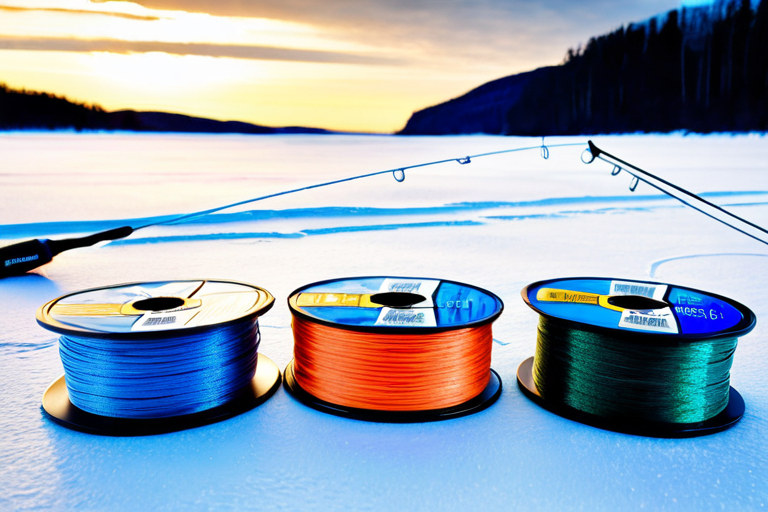
Understanding Line Types: The Foundation of Selection
Monofilament Lines
The traditional choice for ice fishing, monofilament offers excellent knot strength and good stretch. This stretch can be both an advantage and disadvantage—it helps absorb shock when a fish strikes, but can reduce sensitivity. Bass Pro Shops' ice fishing experts recommend monofilament for beginners due to its forgiving nature and affordability.
- Best for: Panfish, walleye, beginners
- Diameter range: 2-6 lb test
- Visibility: High (choose low-vis colors)
Fluorocarbon Lines
Nearly invisible underwater, fluorocarbon has become increasingly popular for ice fishing. It has less stretch than monofilament, providing better sensitivity. According to research from Rapala's Learning Center, fluorocarbon lines absorb only about 0.5% of water compared to monofilament's 8-10%, making them more resistant to freezing.
- Best for: Clear water, pressured fish, jigging
- Diameter range: 1-8 lb test
- Visibility: Extremely low
Braid Lines
With virtually no stretch and small diameter-to-strength ratio, braid offers exceptional sensitivity. However, it's more visible and can freeze more easily. Experienced ice anglers on IceShanty forums often recommend using braid with a fluorocarbon leader to combine sensitivity with invisibility.
- Best for: Deep water, light bite detection
- Diameter range: 10-30 lb test (equivalent to 2-6 lb mono)
- Visibility: High (use leaders)
The Science of Line Diameter and Visibility
Line diameter affects both visibility and performance. Thinner lines are less visible to fish but may sacrifice strength. The Take Me Fishing organization, supported by the Recreational Boating & Fishing Foundation, provides this guideline: "For most ice fishing applications, 2-4 lb test monofilament or fluorocarbon provides the ideal balance of strength and invisibility."
Color selection is equally important. High-visibility lines (bright colors) help anglers see subtle bites, while low-vis lines (clear, green, blue) are less detectable by fish. Many experienced anglers use a combination—high-vis main line with a low-vis leader.
Advanced Techniques: Matching Line to Technique
Different ice fishing techniques demand different line characteristics. Let's break down the most common approaches:
Deadstick Fishing
When using tip-ups or deadsticks, you need line that handles cold well and resists freezing. Monofilament in 6-10 lb test works well here, as it's durable against pike teeth and can handle larger fish.
Jigging
For vertical jigging, sensitivity is king. Fluorocarbon or thin braid with fluorocarbon leader provides the best bite detection. According to In-Fisherman magazine's extensive testing, "Fluorocarbon lines transmit jigging action more directly to the lure, resulting in more natural presentation."
Sight Fishing
When you can see the fish, line visibility becomes critical. Use the thinnest fluorocarbon you can get away with—often 1-2 lb test for panfish, 4-6 lb for walleye.
Temperature Considerations: How Cold Affects Your Line
All fishing lines become stiffer in cold temperatures, but some handle it better than others. Fluorocarbon maintains its flexibility better than monofilament in freezing conditions. Braid, while strong, can become brittle when extremely cold and may absorb water that then freezes.
Scientific American explains that polymers (which fishing lines are made from) become less flexible as temperatures drop because molecular movement slows. This is why testing your line's cold-weather performance is crucial.
Pro Tips from Seasoned Ice Anglers
After consulting with professional guides and tournament anglers, here are their top recommendations:
- Spool correctly: Fill your reel only 80-90% to prevent line memory issues in cold weather.
- Check for nicks: Run the line through your fingers every fishing trip—ice crystals can create micro-abrasions.
- Use line conditioner: Products like KVD Line & Lure Conditioner reduce freezing and improve manageability.
- Carry multiple setups: Have reels spooled with different lines for changing conditions.
- Retie frequently: Cold weakens knots—retie after every fish or every few hours.
"The difference between 2 lb and 4 lb test might not seem like much, but under the ice, it can mean doubling your catch rate," says Mark Martin, veteran ice fishing guide quoted in IceShanty's advanced techniques thread.
Line Maintenance: Extending Your Line's Life
Ice fishing lines require more maintenance than open-water lines. Here's a simple routine:
- After each trip: Wipe down with a soft cloth to remove ice and moisture
- Monthly: Check for abrasions and respool if needed
- Seasonally: Replace all ice fishing lines—UV degradation occurs even in winter
- Storage: Keep lines in a cool, dry place away from direct sunlight
The NOAA Fisheries program notes that proper line maintenance not only improves performance but also reduces environmental impact from discarded lines.
Final Thoughts: Your Line is Your Lifeline
Choosing the right ice fishing line isn't about finding one perfect solution—it's about matching line characteristics to specific conditions, target species, and fishing techniques. The best anglers constantly experiment and adapt.
Remember: Your line is the only physical connection between you and the fish. Treat it with respect, maintain it properly, and it will reward you with more bites and better hooksets. Now get out there and put this knowledge to the test on the ice!
Sources & Further Reading:
- IceShanty Community Forums - Largest ice fishing community online
- In-Fisherman Magazine - Decades of fishing research and testing
- Bass Pro Shops Ice Fishing Resources - Expert advice from leading retailer
- Take Me Fishing - Educational resources from RBFF